The Thing Nobody in the Security Industry Talks About
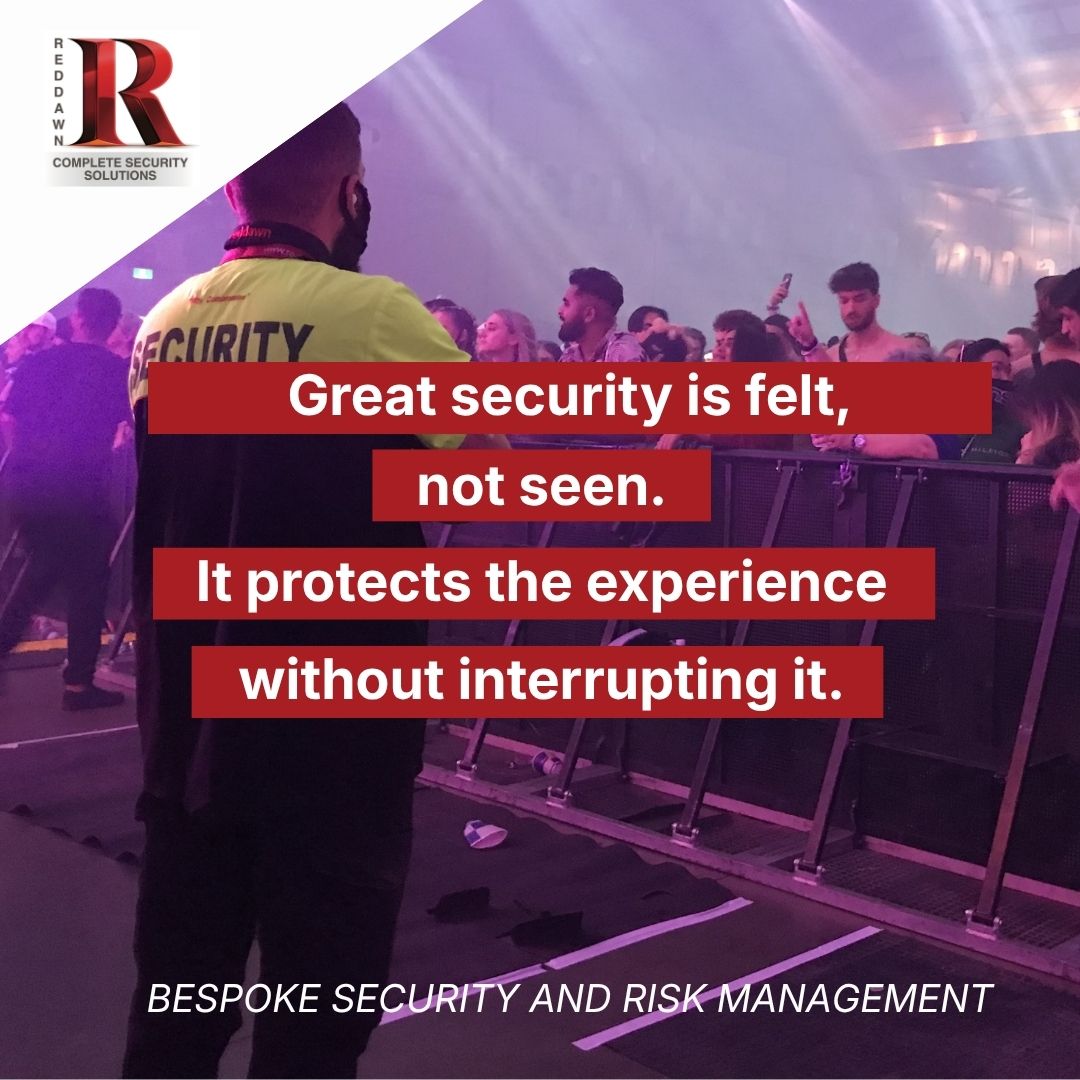
Security work is physically demanding, socially isolating, and regularly confronting. The industry has spent decades building frameworks around physical safety. It has barely started on psychological safety.
There is a version of this piece that is polished and cautious. It lists statistics, references government reports, and concludes with a gentle suggestion that mental health matters. That version gets written, published, forgotten.
This is not that version.
The security industry in Australia has a mental health problem, and most of the organisations operating in it are not talking about it in any honest way. Long shifts, night work, routine exposure to aggression and distress, financial insecurity driven by casualisation, and a workplace culture that has historically treated asking for help as weakness. These are the working conditions of a significant proportion of the security workforce, and they carry real psychological consequences.
At Reddawn, we think about this. Not because it is good for our brand to say so, but because the people who work with us are people, and the conditions under which they work are our responsibility. This piece is an attempt to say some things plainly that the industry tends to say carefully, or not at all.
What the Work Actually Involves
Before talking about mental health in event security, it is worth being honest about what the work involves. Because the gap between public perception of security work and the actual experience of doing it is significant.
Security operatives working major events are regularly managing aggressive behaviour, sometimes violent behaviour, from people who are intoxicated or distressed. They are making rapid decisions about whether a situation requires de-escalation, intervention, or emergency response, often without the time to think carefully and without the benefit of hindsight. They are doing this while managing the safety of thousands of other people simultaneously.
They are often standing for twelve or more hours. Working nights, then days, then nights again. Eating badly, sleeping irregularly, spending significant time separated from family and social networks by shift patterns that do not align with the rhythms of ordinary life.
They are seeing things that are hard to see. Medical emergencies. Crowd distress. Serious assaults. People having the worst nights of their lives. The cumulative weight of that exposure is not nothing. It accumulates.
And many of them are doing this on casual contracts, with no sick leave, no certainty about next week's shifts, and no formal structure for processing what they have experienced.
Why the Industry Has Been Slow to Respond
The security industry's relationship with mental health is shaped by a culture that has traditionally valued stoicism. Toughness. The ability to handle things without making a fuss. These values have a legitimate place in operational security work. The ability to remain calm and functional under pressure is genuinely important.
The problem is when those values extend to an implicit expectation that distress should be invisible, and that asking for support is a sign of weakness rather than a sign of self-awareness.
This culture is changing, slowly, and the change is being driven partly by the broader mental health conversation in Australian workplaces, and partly by a generational shift in what workers expect from their employers. Younger security operatives, in particular, are not arriving at work prepared to accept the implicit bargain that says you leave your wellbeing at the door.
There is also a structural issue. The casualisation of the security workforce makes it genuinely difficult to build the kind of ongoing relationships between staff and supervisors that would allow mental health issues to be identified and supported. When someone is on a casual roster, working different events with different supervisors each time, there is no one person who knows them well enough to notice when something is not right.
This is not just a welfare issue. It is an operational issue. Security staff who are struggling psychologically make worse decisions. They are less effective at de-escalation. They are more likely to respond to difficult situations with force rather than communication. They are more likely to leave the industry entirely, taking their experience and training with them.
What Good Support Actually Looks Like
The mental health conversation in workplaces has generated a lot of awareness content and not enough structural change. Posters about R U OK Day and EAP hotline numbers on noticeboards do not constitute a mental health-supportive workplace. They constitute the appearance of one.
Genuine support looks different. It looks like supervisors who are trained to recognise signs of psychological distress and who have the time and mandate to act on what they notice. It looks like a culture where a security operative can say they are struggling without fearing it will cost them shifts. It looks like meaningful check-ins after difficult events, not just a debrief about what happened operationally. It looks like rosters that take fatigue seriously as a safety issue, because it is.
It also looks like leadership that models the behaviour it wants to see. If senior people in a security organisation talk openly about the psychological demands of the work and about their own experiences of managing those demands, it changes what is permissible for everyone else.
At Reddawn, this is not a solved problem. We are working on it, honestly and imperfectly, because we believe that the people who work with us deserve an organisation that takes this seriously. Our investment in training, in staff development, and in the kind of workplace culture where people feel seen and supported is connected to this. Not as a policy position, but as a genuine value.
The Particular Pressures of Event Security
Event security has some specific mental health considerations that are worth naming separately from the broader security industry picture.
The work is episodic and intense. A major festival or stadium event involves compressed periods of extremely high demand, followed by the abrupt removal of that structure. The transition from the adrenaline of a major event to the ordinary world is not always smooth, and the industry does not always provide support for that transition.
The social dynamics of crowd management at live events are also worth acknowledging. Security operatives at events are often the target of low-level hostility from people who resent their presence, resist their directions, or are looking for a confrontation. Managing that consistently, over a long shift, while remaining professional and calm, is taxing in ways that are not always visible.
Front-of-stage work at large concerts carries particular weight. Operatives at the barrier are physically close to crowd members who may be in distress, who may be having medical events, who may be frightened. They are making continuous judgements about when to extract someone from the crowd, how to do it without creating a secondary problem, and how to manage the emotional reality of what they are seeing while remaining functional in their role.
Nobody goes home from a shift like that unchanged. The question is whether the organisation has created the conditions for those experiences to be processed in a healthy way.
Why This Matters for the Industry
The live events industry in Australia is significant. Major festivals, stadium concerts, sporting events, and touring productions generate substantial economic activity and provide cultural experiences that matter to a lot of people. The security workforce that makes those events safe is an essential part of that infrastructure.
That workforce is currently underpaid, under-supported, and not well understood by many of the organisations that rely on it. The mental health conversation is one part of a broader reckoning that the industry needs to have about how it values the people who do the most demanding work.
The security companies that take this seriously, that build genuine cultures of support and invest in the wellbeing of their people, will attract and retain better staff. They will deliver better outcomes at events. They will be better partners for the event organisers, promoters, and touring productions who need to trust that the people working their events are prepared, supported, and capable.
This is not a soft argument. It is an operational one. And it is why the conversation about mental health in the security industry is not separate from the conversation about professional standards. They are the same conversation.
If You Are Working in This Industry
If you are a security operative reading this and recognising something of your own experience, we want to say something directly: what you carry from this work is real, and seeking support is not weakness. It is the opposite of weakness.
If your workplace does not make that easy, that is a failure of the workplace, not of you.
Beyond Blue's support line is available 24 hours a day on 1300 22 4636. Lifeline is available on 13 11 14. The Black Dog Institute has resources specifically designed for shift workers and people in high-stress occupations at blackdoginstitute.org.au.
Reddawn is committed to building a security workplace where the wellbeing of our people is treated as seriously as operational performance. If you are interested in working with an organisation that takes that commitment seriously, visit our careers page or contact us at contact@reddawn.com.au.
Find out more about how Reddawn can help your business and request a quote today.

Latest news
.jpg)

A holistic and tailored approach to risk management
